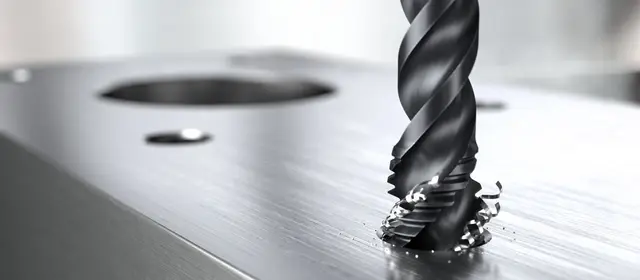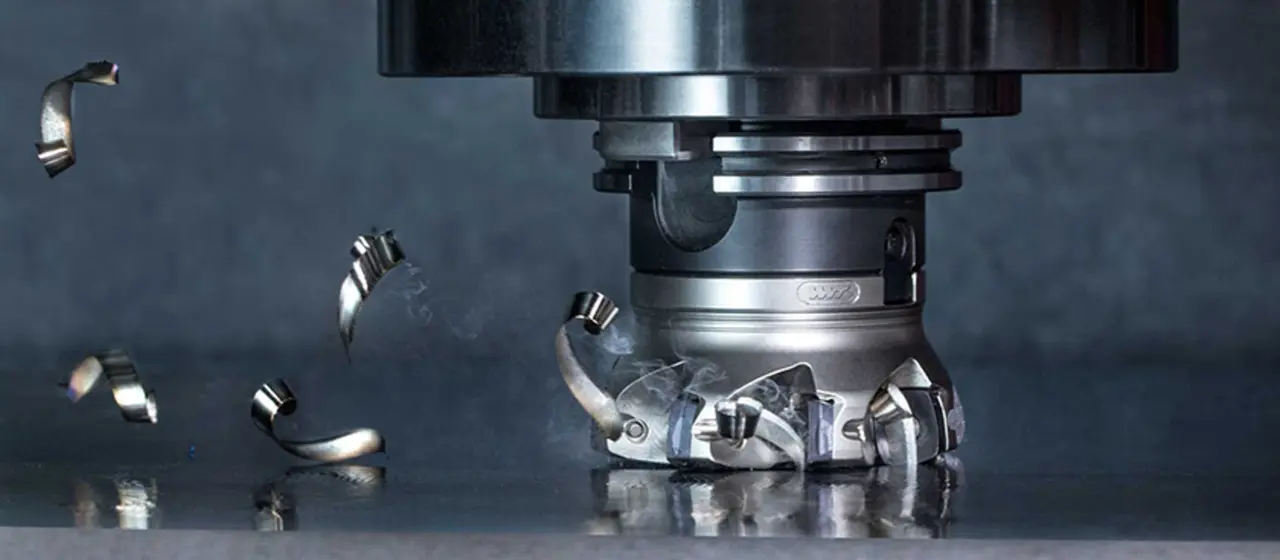
In CNC machining, cutting parameters — spindle speed, table feed rate and depth of cut — directly determine the quality of your parts, the life of your tools and the longevity of your machine. Too high a cutting speed causes premature tool wear, or even breakage mid-operation; too low a feed rate makes the tool rub instead of cutting, which overheats the edge and degrades the surface finish; conversely, an excessive feed rate overloads the spindle, makes the part vibrate (chatter) and can damage the bearings.
The calculator below updates the results in real time with every change: no button to press, you see the impact of each parameter instantly.
Recommended cutting speeds by material
Reference values for TiAlN-coated carbide cutters under standard conditions (5 % emulsion coolant, rigid set-up). Adjust according to your tool, your machine and your lubrication.
| Material | Vc (m/min) | fz — D10 (mm/tooth) | Notes |
|---|---|---|---|
| Aluminium Alu | 200 – 500 | 0,05 – 0,20 | Polished or DLC-coated cutter. Chip evacuation is critical. |
| Mild steel < 500 MPa | 80 – 200 | 0,05 – 0,15 | Easy to machine. Watch out for exit burrs. |
| Medium-hard steel 500–850 MPa | 60 – 150 | 0,04 – 0,12 | TiAlN recommended. Generous coolant flow. |
| Hard steel > 850 MPa | 30 – 80 | 0,03 – 0,08 | Light engagements. Rigid machine required. |
| Austenitic stainless steel 304/316 | 40 – 100 | 0,04 – 0,10 | Work-hardens. Keep the feed rate up, avoid rubbing. |
| Grey cast iron GG25 | 60 – 150 | 0,06 – 0,15 | Powdery chips. Extraction recommended. |
| Titanium Ti6Al4V | 30 – 60 | 0,03 – 0,08 | Low thermal conductivity. High-pressure coolant. |
| Brass / Bronze | 150 – 300 | 0,05 – 0,15 | Leaded brass: short chips. Phosphor bronze is abrasive. |
| Plastics / Composites | 200 – 600 | 0,05 – 0,20 | High speed, avoid melting. 1–2 teeth. |
The three fundamental formulas
Understanding the formulas lets you adapt the calculator's results to your specific situation.
Spindle speed N
The speed at which the spindle must turn so that every point on the cutting edge moves at the optimum cutting speed. For aluminium (Vc = 350 m/min) with a D10 cutter: N ≈ 11,140 rpm.
Table feed rate Vf
The linear travel speed of the tool relative to the part. The higher the feed rate, the faster the material removal — at the cost of increased cutting force.
Material removal rate Q
The volume of material removed per minute. A key indicator for estimating machining time and checking that spindle power is sufficient (rule of thumb: 1 cm³/min of steel ≈ 0,3 kW required).
ae / ap engagement strategies
The ratio between axial depth of cut (ap) and radial engagement (ae) defines your machining strategy. Two approaches coexist:
low ap
high ap
ae = width
When to adjust your parameters
Increase Vc
- High-performance coating (TiAlN, AlCrN): +20 to +30% on Vc.
- Finishing: high Vc for a better surface finish.
- Rigid set-up + clamped part: use the top of the range.
Reduce Vc
- Chatter (high-pitched noise, regular marks): lower Vc by 15–25%.
- Accelerated wear (edge chipping): excessive temperature, reduce by 10–20%.
- Long or slender tool: overhang reduces rigidity, so reduce Vc and fz.
- Unknown material: always start at the bottom of the range.
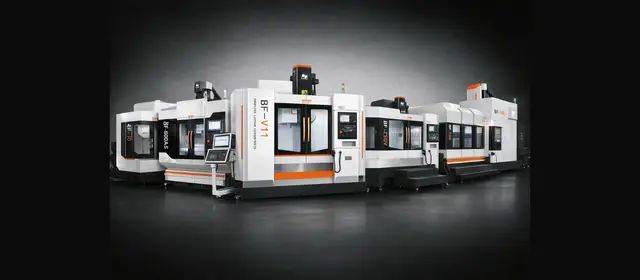
Our Baofeng machining centres for all materials
All our machines are fitted with high-performance spindles suited to the Vc ranges of common materials:
- V Series — 8,000 to 15,000 rpm spindle, ideal for general engineering in steel/aluminium.
- VP Series — box-way for hard materials (hardened steel, stainless steel, titanium).
- T Series — 12,000 rpm, optimised for high-speed drilling and tapping.
- A Series — 5-axis up to 18,000 rpm for aerospace and medical.
Need advice on cutting parameters for your machine? Our technical team will reply within 24 hours. Looking for the right machine for your production? Try our configurator.